HIGH TIMES AT THE VA
A couple months ago I was asked to meet with a fellow writer from High Times who had read some of my articles, and wanted to talk about a story he was working on for veterans.
Right on.
Nothin unusual here, I’ve been doing this back and forth since 2010 when I began organizing at the University of Arizona.
Sometimes tho, your friends and natural allies can share your story in a way that is unhelpful. Sometimes, this help can actually hurt. With that always in mind I recorded my conversation with Lucas Indrikovs from High Times, and saved his follow-up questions along with my responses to them.
It’s not for me to judge a storyteller twisting yarn, but I do like to have a clear understanding of the story’s origins, especially if I’m a feature. Something I have been doing for quite some time now which has turned out to be really useful.
With that being said, here is the most recent publication on the veteran/cannabis issue from High Times magazine.
Here is the recorded conversation between Lucas and myself.
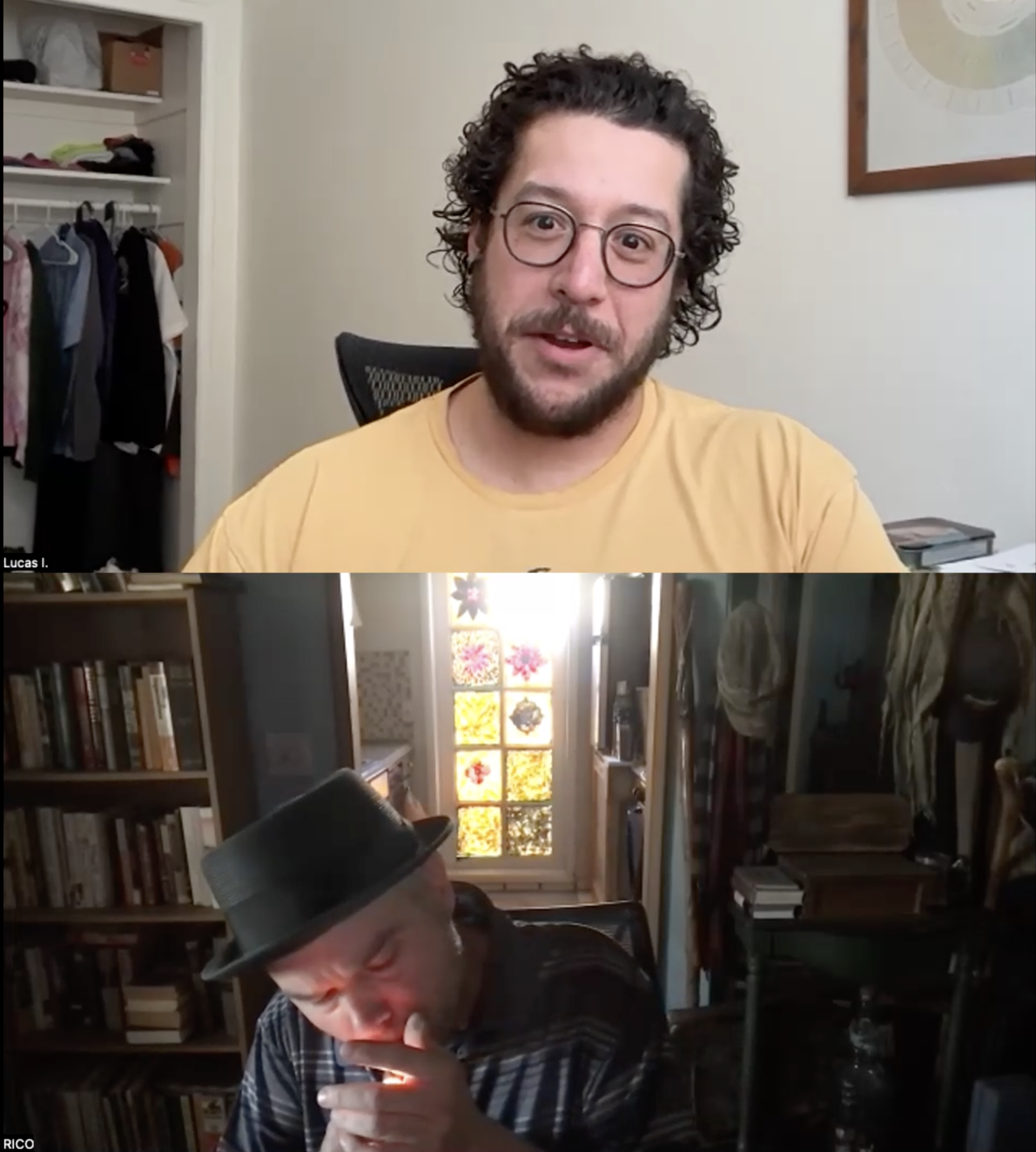
And here are the follow-up questions/responses:
Lucas Indrikovs’ (L.I.) Question: You wrote something that stuck with me. That telling people who need to feed their families to "do the right thing" is arrogant. That you've been able to do this work because the pension and VA benefits gave you time, two things most people don't have. So here's my question: the Burn Slow Doctrine is a beautiful framework, but does it require structural support to function? Is it a philosophy for the few, or is there a version of it available to someone working two jobs?
Ricardo Pereyda’s (R.P.) Answer: The “Burn Slow Doctrine,” as I describe it, is really me trying to make sense of my own trajectory—what it took to survive, to stay in the fight, and to keep producing work over time. I didn’t write it as a blueprint for others so much as a record of what sustained me.
And part of that truth is structural. I had time in ways a lot of people don’t. A pension, VA benefits—those things created space. So no, I don’t think you can pretend this framework exists in a vacuum or that it’s equally accessible to someone working two jobs just trying to stay afloat.
What is transferable isn’t the pace—it’s the orientation. Even in constrained circumstances, people find ways to move deliberately, to resist burnout, to build something instead of just reacting. But the reality is, the ability to “burn slow” is absolutely shaped by what kind of support you have underneath you.
L.I. Question: You wrote that protests flare and fade but an essay has a half-life, that writing makes sure no bureaucrat can claim "we didn't know." You were a source for the MAPS/Sue Sisley investigative piece, been publishing at High Times, building an archive. Who are you writing for? The people in the system now, the historians who come later, or the next wave of veterans who need a guide?
R.P. Answer: I started writing to reclaim my own voice, first and foremost—to document what I was seeing and experiencing in real time, while I was still inside it.
But over time, it became clear I was writing on multiple timelines at once. There are people in the system right now who need to be confronted with what’s actually happening. There are other veterans trying to make sense of their own experiences who might see themselves in it. And then there’s the long game—the record. Making sure no one can come back later and say they didn’t know.
I’ve been influenced by people who chose to speak up when it would’ve been easier not to. So part of this is paying that forward—leaving something behind that someone else can pick up when they hit that same crossroads.
L.I. Question: The Burn Slow Doctrine ends not with triumph but with seeding the next generation. Arizona Garden Month is, by your own logic, a physical expression of the whole philosophy. But what does the garden look like when you're not tending it anymore? Who picks up the work? And is there a version of this movement that doesn't need a Rico to keep it alive?
R.P. Answer: The Burn Slow Doctrine isn’t finished, it’s something still in motion. What I wrote was a snapshot not a conclusion.
Arizona Garden Month is one expression of that, taking years of work and translating it into something public-facing that acknowledges the role of nature in healing, for individuals and communities.
The best way I understand my role in all of this is as a scribe. I’ve been observing, documenting, and contributing where I can. I’m part of a much longer continuum. This work didn’t start with me, and it won’t end with me.
People like Alice O'Leary Randall and so many others carried this fight forward long before I showed up. Many of them didn’t live to see the changes they helped create. That’s the reality of movements like this. It’s a relay.
So no, it doesn’t require a “Rico.” It requires people who, at some point, decide they can’t look away. What they do with that decision varies but that’s where the continuity comes from.
If we succeed, it won’t be because of any one individual – it’ll be because enough people, across generations, chose to carry the work forward."
-RICO